
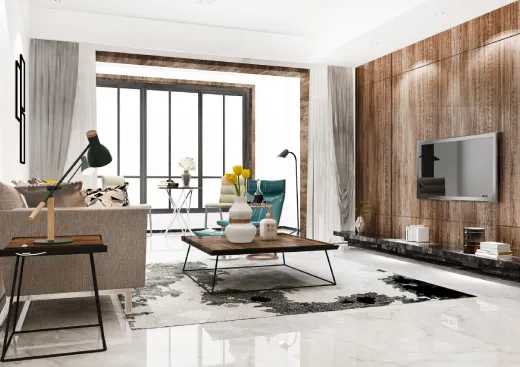
High-traffic floors are those areas in a building that experience constant, repetitive movement. This includes busy corporate lobbies, bustling retail stores, school hallways, and even common areas in active family homes, such as kitchens and entryways. These environments demand more than just aesthetic appeal; they require a flooring solution engineered for extreme resilience. Choosing the wrong material in these critical zones leads to premature wear, costly maintenance, and frequent replacement, ultimately disrupting business operations and daily life. Porcelain tile stands out as the flooring material specifically designed to meet and exceed these intense demands for long-term structural integrity and minimal upkeep.
Superior Composition: The Technical Advantage of Porcelain
Porcelain tile is not merely a refined version of standard ceramic tile; it is a technically superior product created through a highly rigorous manufacturing process. It is made from a dense blend of kaolin clay, feldspar, and quartz, which is fired at incredibly high temperatures—often exceeding 1,200°C. This intense heat and pressure process vitrifies the materials, resulting in a tile that is significantly harder, denser, and less porous than other flooring options. This vitrification is the core reason for its championship status on high-traffic floors, providing physical strength that mimics natural stone but without the same maintenance burden.
Low Porosity: The Key to Stain and Moisture Resistance
The extreme density of porcelain tile results in exceptionally low porosity, meaning it absorbs less than 0.5% of water. This low absorption rate provides tremendous practical benefits for high-traffic environments. Since moisture cannot easily penetrate the surface, porcelain tiles are inherently resistant to staining from spills, chemical exposure, and ground-in dirt. This makes them the perfect choice for busy restaurant kitchens, hospital corridors, and bathrooms where hygiene and frequent cleaning are paramount. Standard cleaning methods are typically sufficient to keep porcelain looking pristine, simplifying maintenance protocols considerably.
Unmatched Resistance to Abrasion and Wear
High-traffic areas are defined by continuous scuffing, scraping, and rolling loads. Porcelain tile’s hardness allows it to resist abrasion and scratching far better than softer materials like hardwood, laminate, or even many natural stones. The surface finish, whether glazed or unglazed, is rated using the Porcelain Enamel Institute (PEI) scale. Porcelain often achieves the highest ratings (PEI 4 or PEI 5), indicating its suitability for heavy commercial use. This superior resistance means the tile"s original look and finish remain intact for decades, even under the most demanding conditions.
Aesthetic Versatility Without Compromising Strength
Historically, commercial floors often sacrificed beauty for function. Today, porcelain tile offers limitless aesthetic freedom without compromising its strength. Advancements in high-definition digital printing technology allow porcelain tiles to convincingly mimic the look of natural materials, including rare marbles, rustic wood planks, and concrete finishes. This means designers can achieve any desired high-end look in a high-traffic area, knowing that the underlying material provides maximum durability. The ability to choose from a vast array of colors, textures, and large format sizes makes porcelain the ultimate flexible design champion.
A Prudent Long-Term Investment
While the initial cost of high-quality porcelain tile and professional installation may sometimes be higher than that of lower-grade alternatives, the long-term return on investment is undeniable. Due to its exceptional durability and minimal maintenance requirements, porcelain flooring does not need the frequent sealing, polishing, or replacement cycles that plague other materials. For any client prioritizing resilience, long-term savings, and minimal disruption from repairs, specifying porcelain tile is the most responsible and champion decision for high-traffic environments.
Leave a Comment