
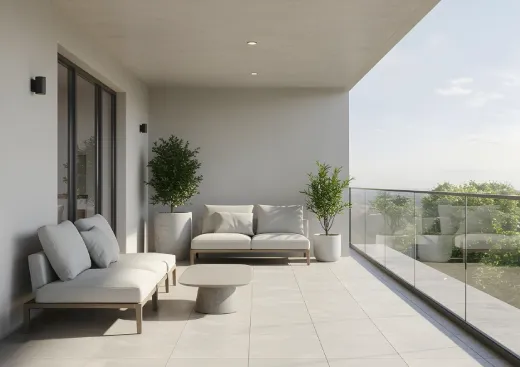
Many homeowners mistakenly believe that a tile’s suitability is purely an aesthetic choice. In reality, the difference between a tile rated for a powder room and one for a patio is profoundly technical. Placing an interior tile outdoors is a common and costly mistake that leads to premature failure. Interior tiles are manufactured for controlled climates. Exterior tiles must be engineered to survive harsh, unpredictable environmental conditions, including extreme temperature shifts, direct solar exposure, and significant moisture. Ignoring these technical specifications compromises the longevity and safety of the entire installation.
Water Absorption: The Critical Freeze-Thaw Factor
The single most critical difference lies in water absorption. This factor is measured by the tile’s porosity. Indoor tiles, such as standard ceramics, often have higher absorption rates. If these tiles are installed outdoors in climates that experience freezing temperatures, the absorbed water will expand when it freezes. This expansion creates internal pressure that inevitably causes the tile body to crack, shatter, or delaminate from the substrate. Exterior-grade porcelain tiles are manufactured under extreme pressure to achieve a vitrified state, resulting in a water absorption rate of less than 0.5%. This negligible porosity ensures the tile remains structurally sound even through multiple freeze-thaw cycles, making it truly weatherproof.
Slip Resistance: Prioritizing Safety in Outdoor Areas
Safety is a paramount concern for any outdoor surface that is exposed to rain, snow, or pool splash. Tiles intended for indoor areas like dry hallways often have a smooth, decorative finish that lacks adequate friction when wet. Conversely, exterior tiles are specifically designed and manufactured with texture or an abrasive additive to enhance **slip resistance**. This feature is measured using specific industry standards, such as the DCOF (Dynamic Coefficient of Friction) rating. Always select exterior tiles with a high DCOF rating to mitigate the risk of slips and falls in potentially wet or icy outdoor environments, ensuring the safety of guests and family members.
Durability and Abrasion Resistance Ratings
Exterior surfaces are subjected to more intense mechanical wear than indoor floors. This includes foot traffic that tracks in abrasive dirt, grit, and stones, as well as heavy patio furniture and constant cleaning. Interior tiles often feature a decorative glaze that can easily be scratched or worn down under these conditions. Exterior tiles, particularly those used in commercial patios or walkways, must be rated PEI Class 4 or 5 for superior abrasion resistance. This guarantees that the tile’s finish will maintain its visual integrity and structural strength despite constant exposure to harsh external elements and heavy use over many years.
Installation Differences: Managing Water and Movement
The installation process itself changes drastically between the two environments. Indoor installations prioritize level surfaces and aesthetic joint lines. Exterior installations, however, must prioritize **water management**. This requires the installer to establish a proper slope or pitch in the substrate to facilitate effective drainage away from the structure. Furthermore, outdoor installations demand the meticulous placement of expansion joints to manage the thermal movement caused by sun exposure and extreme temperature swings. Using highly flexible, polymer-modified mortars is essential to ensure the tile maintains a strong bond despite this constant movement.
Leave a Comment